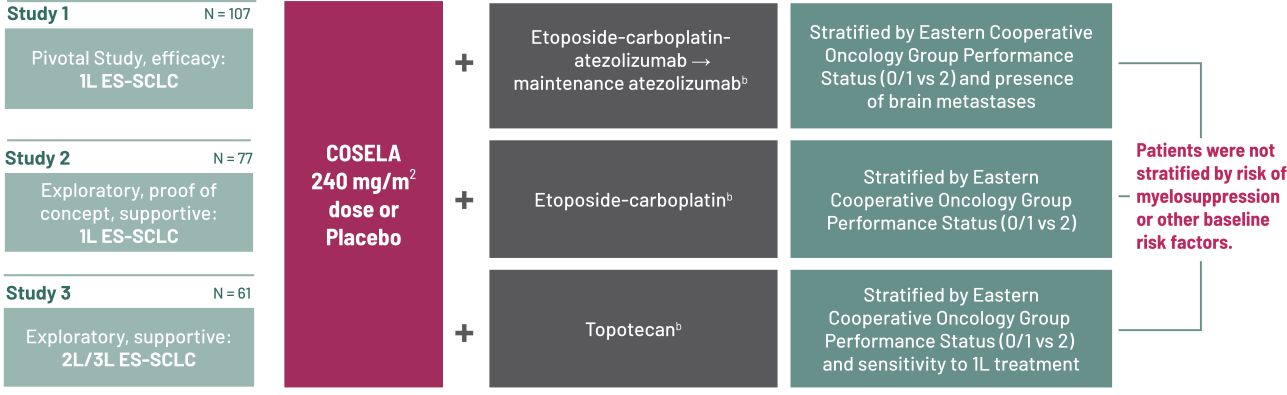
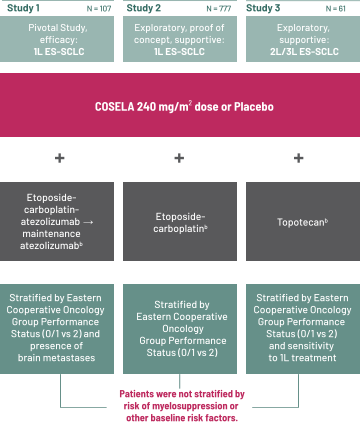
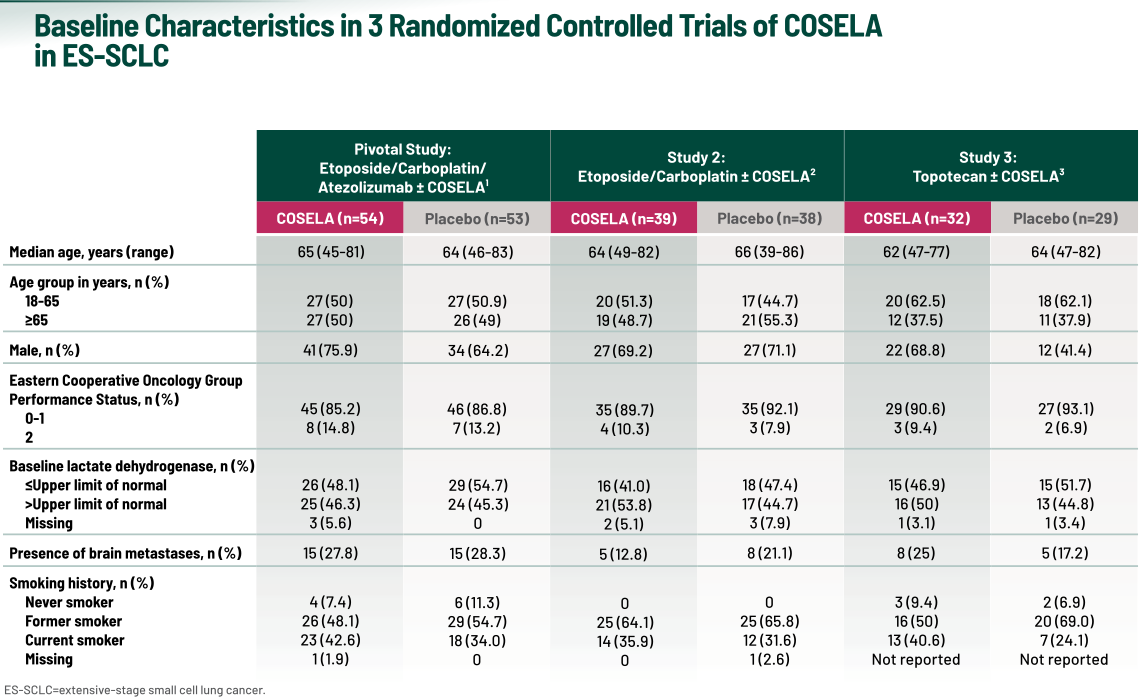
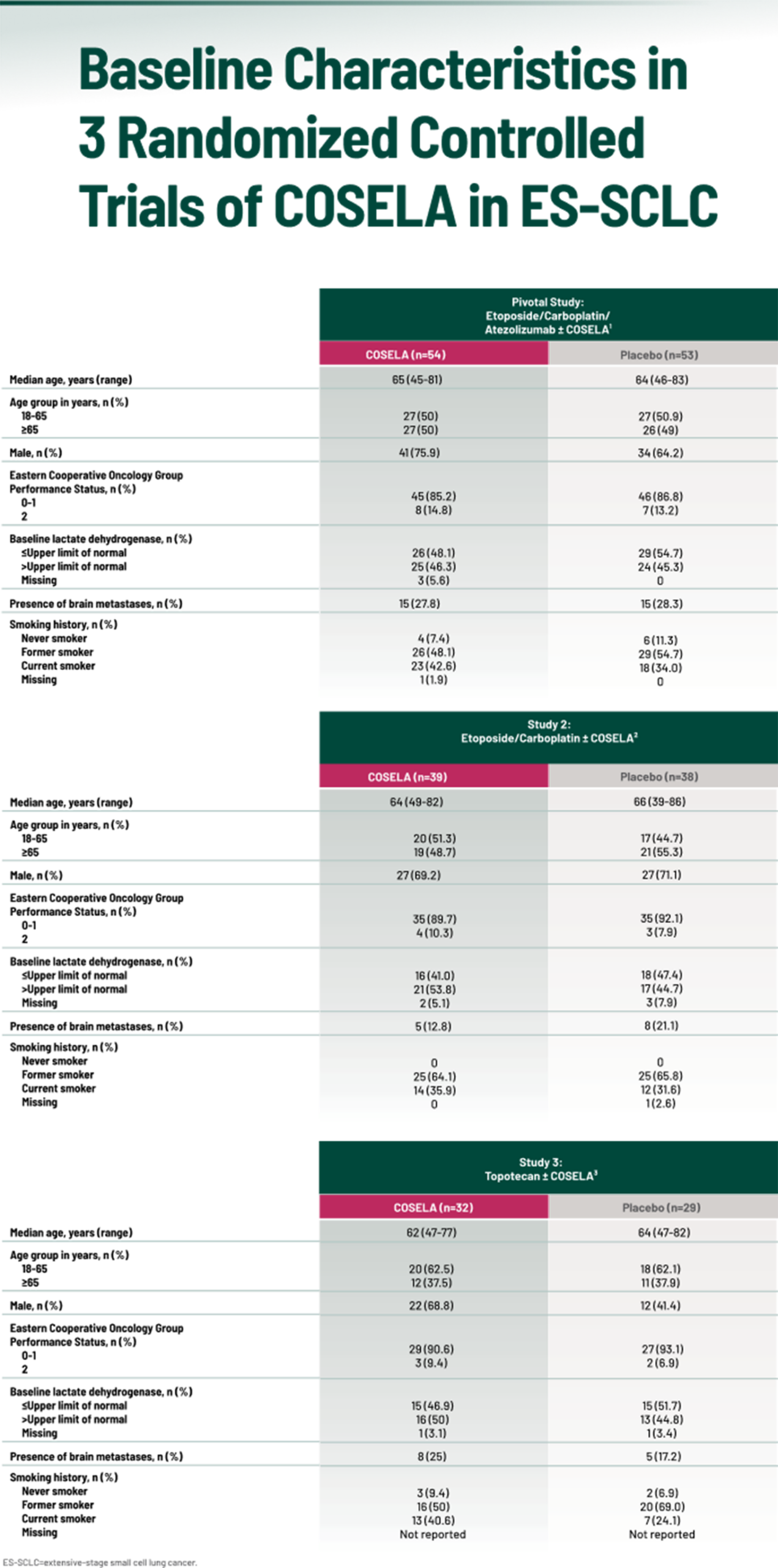
References: 1. COSELA (trilaciclib) Prescribing Information. Pharmacosmos Therapeutics Inc.; 2025. 2. Weiss JM, Csoszi T, Maglakelidze M, et al. for the G1T28-02 Study Group. Myelopreservation with the CDK4/6 inhibitor trilaciclib in patients with small-cell lung cancer receiving first-line chemotherapy: a phase 1b/randomized phase II trial. Ann Oncol. 2019;30:1613-1621. 3. Daniel D, Kuchava V, Bondarenko I, et al. Trilaciclib prior to chemotherapy and atezolizumab in patients with newly diagnosed extensive-stage small cell lung cancer: a multicentre, randomised, double-blind, placebo-controlled phase II trial. Int J Cancer. 2021;148:2557-2570. Accessible at https://onlinelibrary.wiley.com/doi/full/10.1002/ijc.33453
References: 1. COSELA (trilaciclib) Prescribing Information. Pharmacosmos Therapeutics Inc.; 2025.
2. Daniel D, Kuchava V, Bondarenko I, et al. Trilaciclib prior to chemotherapy and atezolizumab in patients with newly diagnosed extensive-stage small cell lung cancer: a multicentre, randomised, double-blind, placebo-controlled phase II trial.
Int J Cancer. 2021;148:2557-2570.
3. Referenced with permission from the NCCN Clinical Practice Guidelines in Oncology (NCCN Guidelines®) for Hematopoietic Growth Factors, V.3.2026. © National Comprehensive Cancer Network, Inc. All rights reserved. Accessed November 18, 2025. To view the most recent and complete version of the guideline, go online to NCCN.org.
4. Referenced with permission from the NCCN Clinical Practice Guidelines in Oncology (NCCN Guidelines®) for Small Cell Lung Cancer V.2.2026. © National Comprehensive Cancer Network, Inc. 2025. All rights reserved. Accessed October 14, 2025. To view the most recent and complete version of the guideline, go online to
NCCN.org.
5. Khurshid H, Ismaila N, Das M, et al. Systemic therapy for small-cell lung cancer: ASCO guideline rapid recommendation update clinical insights.
J Clin Oncol. 2024;21(6):754-758.
References: 1. Daniel D, Kuchava V, Bondarenko I, et al. Trilaciclib prior to chemotherapy and atezolizumab in patients with newly diagnosed extensive-stage small cell lung cancer: a multicentre, randomised, double-blind, placebo-controlled Phase II trial. Int J Cancer. 2021;148:2557-2570. 2. Weiss JM, Csoszi T, Maglakelidze M, et al. for the G1T28-02 Study Group. Myelopreservation with the CDK4/6 inhibitor trilaciclib in patients with small-cell lung cancer receiving first-line chemotherapy: a phase 1b/randomized phase II trial. Ann Oncol. 2019;30:1613-1621. 3. Hart LL, Ferrarotto L, Andric ZG, et al. Myelopreservation with trilaciclib in patients receiving topotecan for small cell lung cancer: results from a randomized, double-blind, placebo-controlled phase II study. Adv Ther. 2021;38:350-365. 4. COSELA (trilaciclib) Prescribing Information. Pharmacosmos Therapeutics Inc.; 2025. 5. Weiss J, Goldschmidt J, Andric Z, et al. Effects of Trilaciclib on Chemotherapy-Induced Myelosuppression and Patient-Reported Outcomes in Patients with Extensive-Stage Small Cell Lung Cancer: Pooled Results from Three Phase II Randomized, Double-Blind, Placebo-Controlled Studies. Clin Lung Cancer. 2021;22(5):449-460.
Reference: 1. COSELA (trilaciclib) Prescribing Information. Pharmacosmos Therapeutics Inc.; 2025.
References: 1. Weiss J, Goldschmidt J, Andric Z, et al. Effects of trilaciclib on chemotherapy-induced myelosuppression and patient-reported outcomes in patients with extensive-stage small cell lung cancer: pooled results from three phase II randomized, double-blind, placebo-controlled studies. Clin Lung Cancer. 2021;22(5):449-460. 2. Daniel D, Kuchava V, Bondarenko I, et al. Trilaciclib prior to chemotherapy and atezolizumab in patients with newly diagnosed extensive-stage small cell lung cancer: a multicentre, randomised, double-blind, placebo-controlled phase II trial. Int J Cancer. 2021;148:2557-2570. 3. Hart LL, Ferrarotto L, Andric ZG, et al. Myelopreservation with trilaciclib in patients receiving topotecan for small cell lung cancer: results from a randomized, double-blind, placebo-controlled phase II study. Adv Ther. 2021;38:350-365.
References: 1. Elijah J, Jain P, Holdsworth A, et al. Trilaciclib use in extensive-stage small cell lung cancer (ES-SCLC): are clinical benefits seen in the real world? Supportive Care in Cancer. 2024;32(622):1-9. 2. Goldschmidt J, Hart L, Scott J, et al. Real-world outcomes of trilaciclib among patients with extensive small-cell lung cancer receiving chemotherapy. Adv Ther. 2023;40:4189-4215.
References: 1. COSELA (trilaciclib) Prescribing Information. Pharmacosmos Therapeutics Inc.; 2025. 2. Weiss J, Goldschmidt J, Andric Z, et al. Effects of trilaciclib on chemotherapy-induced myelosuppression and patient-reported outcomes in patients with extensive-stage small cell lung cancer: pooled results from three phase II randomized, double-blind, placebo-controlled studies. Clin Lung Cancer. 2021;22(5):449-460.
References: 1. COSELA (trilaciclib) Prescribing Information. Pharmacosmos Therapeutics Inc.; 2025. 2. Gorski L, Hadaway L, Hagle M, et al. Infusion therapy standards of practice. J Infus Nurse. 2006:29:S1-S92.
References: 1. COSELA (trilaciclib) Prescribing Information. Pharmacosmos Therapeutics Inc.; 2025. 2. Gorski L, Hadaway L, Hagle M, et al. Infusion therapy standards of practice. J Infus Nurse. 2006;29:S1-S92. 3. Referenced with permission from the NCCN Clinical Practice Guidelines in Oncology (NCCN Guidelines®) for Hematopoietic Growth Factors V.3.2026. ©National Comprehensive Cancer Network, Inc. 2025. All rights reserved. Accessed November 18, 2025. To review the most recent and complete version of the guideline, go online to NCCN.org. 4. Referenced with permission from the NCCN Clinical Practice Guidelines in Oncology (NCCN Guidelines®) for Small Cell Lung Cancer V.2.2026. ©National Comprehensive Cancer Network, Inc. 2025. Accessed October 14, 2025. To review the most recent and complete version of the guideline, go online to NCCN.org. 5. Khurshid H, Ismaila N, Das M, et al. Systemic therapy for small-cell lung cancer: ASCO guideline rapid recommendation update clinical insights. J Clin Oncol. 2024;21(6):754-758.